


- Englich
Courses
on Site
 Intensive German Course
Weekend Course
Angebot! Intensivkurs 3 Tage pro Woche
Angebot! Deutsch Crashkurs
Kompaktkurs Deutsch
German Courses for Ukrainians under the ÖIF "Individual Support" Program
Deutschkurs + Vorbereitungskurs
Evening Course
Double German Course
German Crash Course
German Visa Course
German Course for People from Ukraine in Vienna
Job Entry Course for Migrants and Refugees
German courses for companies
Individual Lessons
Conversation + Grammar Course
Deutsch-Sprachreise Wien
Intensive German Course
Weekend Course
Angebot! Intensivkurs 3 Tage pro Woche
Angebot! Deutsch Crashkurs
Kompaktkurs Deutsch
German Courses for Ukrainians under the ÖIF "Individual Support" Program
Deutschkurs + Vorbereitungskurs
Evening Course
Double German Course
German Crash Course
German Visa Course
German Course for People from Ukraine in Vienna
Job Entry Course for Migrants and Refugees
German courses for companies
Individual Lessons
Conversation + Grammar Course
Deutsch-Sprachreise Wien
Online
Courses
 Online German Course
Deutsch-Crashkurs Online
Kompaktkurs Deutsch Online
Online German Course (Premium)
Online Weekend German Course
Online English Course
Online Weekend English Course
Online Double German Course
Online Language Course for Companies
Online German Course
Deutsch-Crashkurs Online
Kompaktkurs Deutsch Online
Online German Course (Premium)
Online Weekend German Course
Online English Course
Online Weekend English Course
Online Double German Course
Online Language Course for Companies
German Integration Courses
 German Integration Course A2
German ÖIF Exam Preparation Course
Free Preparation Course for the ÖIF Integration Exam
ÖIF Voucher
German Integration Course A2
German ÖIF Exam Preparation Course
Free Preparation Course for the ÖIF Integration Exam
ÖIF Voucher
Exam Preparation
 Exam A1
Exam A2
Exam B1
Exam B2
Exam C1
Model Tests ÖIF A1
Model Tests ÖIF A2
Model Tests ÖIF A2-B1
Model Tests ÖIF B2
Model Tests ÖIF C1
Materials for Books
Exam A1
Exam A2
Exam B1
Exam B2
Exam C1
Model Tests ÖIF A1
Model Tests ÖIF A2
Model Tests ÖIF A2-B1
Model Tests ÖIF B2
Model Tests ÖIF C1
Materials for Books
Grammar and Conversation
Grammar A1
Grammar A2
Grammar B1
Grammar Exercises
Test Tasks
Conversation Questions
Online
German Learning
 Professional Language
Learn German with Pictures
Learn German with Dialogues
Video Materials
Audio Materials
Learning Games
Topics and Texts
Professional Language
Learn German with Pictures
Learn German with Dialogues
Video Materials
Audio Materials
Learning Games
Topics and Texts
Learn German Online with Videos
 Video Lessons for Learning German
Cartoons for Learning German
Video Tutorials for Learning English
Video Lessons for Learning German
Cartoons for Learning German
Video Tutorials for Learning English
German course A1 | A2 | B1 in Vienna


4-month German course in Vienna
In-depth study of the German language. Learn German with professionals. You will learn to speak, write and read German correctly.
➨ Start: 07.10.2024

2 or 4 month German course
We are proud to offer intensive German lessons in one of the most culturally rich and historic cities in Europe. Our course is designed to be suitable for students of all language levels, both absolute beginners and those who already have certain knowledge.
Join our course and discover that learning German is a fascinating and rewarding journey! Register today and open the doors to the many opportunities that learning the German language offers.

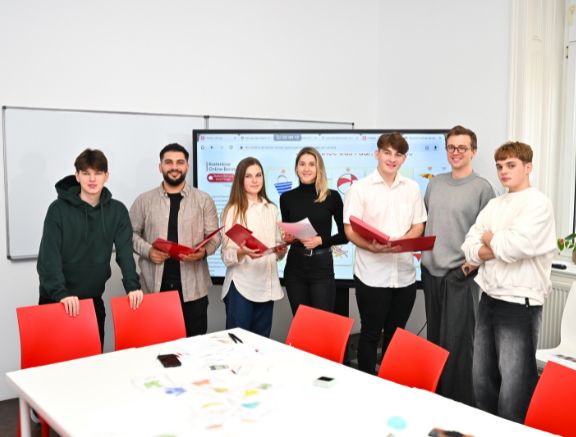
Learning levels A1, A2, B1
- Level A1 (German course for beginners):
We start with the basics: greetings, introductions, basic conversation topics. Suitable for absolute beginners. - Level A2 (German course for elementary):
We expand vocabulary, deepen understanding of grammar and begin to develop basic conversation skills. - Level B1 (intermediate German course):
Students work on improving their grammatical skills, expanding vocabulary and developing reading and writing skills.
Dates for German courses in Vienna
2024
German course A1 in Vienna
German lessons at language level A1 include the following topics:
1. Welcome
The participants learn vocabulary that is necessary for greeting their conversation partners or saying goodbye to them. You learn elementary number words and letters that are important for being able to write down spoken language or form primitive dialogues.

2. Home
In addition to the active vocabulary, there are also vocabulary that is necessary to be able to talk about yourself or your life. You learn the rules for displaying your contact details as well as questions about the objects around you.

3. Family life
In the German A1.1 weekend course, participants learn to talk about their family members, their characteristics and their mutual relationships. You also practice how to talk about the past.

4. Everyday life
You learn to report on past events as well as planned events. The participants learn to make appointments and discuss them.

5. Food
Here you learn to talk about food and your eating habits. As part of the dialogues, participants can put together a menu and get an overview of the most important dishes and foods.

6. Housing
During German lessons at language level A1.1 on Saturday and Sunday, you acquire the vocabulary for everyday objects and their properties, and you also learn simple sentence structures. Each object is dedicated to an individual topic and short stories are written using it.

7. Days and weeks
The teacher imparts basic knowledge about numbers and the participants learn to talk about the times of day. Different hobbies and main forms of everyday activities are also covered here.

8. Work and career
The objectives of the German weekend course require the participant to be able to report in a few words about their job and their professional skills.

9. Shopping
The initial level assumes understanding prices, the ability to contact the seller, get advice from them and ask about product availability. The size and shape of the products are also part of the lessons in the German course on the weekend.

10. Weather
Description of clothing items, names of things, different styles.

11. Medicine
The participants learn to talk to the doctor and talk about their illnesses and symptoms. You work through the sequence of actions and the behavior pattern during an emergency call.

12. Orientation in the city
Vocabulary for directions of movement, questions for searching for sights and specific places are introduced into the vocabulary. You also gain knowledge about traffic control.

13. Etiquette
In the German course on the weekend A1.2 you will learn the basics of business etiquette, elementary expressions for official and business communication. You learn how to ask for help, how to ask simple questions related to the business world.

14. Shops
The participants learn the names for different items of clothing and practice dialogues for communicating with salespeople and how to inquire about specific items of goods.

15. Travel
You will learn how to ask about the location, learn to talk about the weather and the surrounding situation. Participants practice dialogues about weekly and monthly passes, purchasing tickets, and how to ask for other information regarding the trip.

16. Private life
In the German course on the weekend A1.2 you learn to state your marital status, talk about the past day and answer basic questions - all of this takes place within the framework of this topic. Emotion characteristics and states of consciousness are also covered for a more detailed description of his well-being.

17. Living together
Names for objects in the apartment, pieces of furniture and common pets are treated objectively. The skills for conversations about everyday problems and neighbors are also useful - all of this is taught using simple structures.

18. Rules
The teacher talks about the simple rules that apply in Germany that you should follow. You learn elementary rules of road traffic and social relationships that you shouldn't violate.

19. Plans and wishes
The participants acquire vocabulary and learn how to report their wishes and immediate plans. They also create a wish card, which helps them practice their written language skills.

20. Problems and difficulties
As part of the courses on Saturday and Sunday A1.2, you learn how to ask for help and acquire structures for expressing or accepting an apology. The basics of doing business with how to properly report a problem are taught.

German course A2 in Vienna
German lessons at language level A2 include the following topics:
1. Hobbies
Participants share their passions and learn how to keep a conversation going about them. You also learn how to take a positive or negative attitude towards something.

2. Media
The teachers teach the participants how to properly write emails and SMS messages. Among other things, you will learn computer-related vocabulary as well as the expressions that are necessary for surfing the Internet.

3. Restaurant
In the course of learning the German language at language level A2.1, expressions are covered that are necessary to place an order in a restaurant, to find your way around the menu and to ask the necessary questions.

4. Housing
You learn vocabulary and expressions that are necessary for describing your house and your everyday life and how to ask questions about the house of your conversation partner.

5. Life of its own
The participants are given more opportunities to tell stories about themselves, about their lives and about the reasons for moving. The new life and future plans are part of the teaching program.

6th weekend
The participants talk about how they spend their weekend, exchange their plans for the coming weekend, and remember the happiest days of their lives.

7. School
A comprehensive module, which is only covered at a basic level in the German weekend course for beginners A2.1. School lessons, grades, games during the break, names of school subjects form the basis of this module. The listeners have the opportunity to exchange their experiences and talk about their school days or the school days of their children or relatives.

8. Work
You continue learning about different professions, the traditional professions for Germany and Austria are discussed, and you create dialogues about everyday life. Office technology and structures for polite communication are also part of this topic.

9. Dream apartment
With the help of the teachers' stories about the peculiarities of life in Germany and Austria, the participants acquire the basic knowledge about looking for an apartment and acquire the necessary vocabulary. The weekend German course A2.1 helps you find your way around the information about an apartment and learn how to communicate with real estate agents.

10. Organizing celebrations
Together with the participants, the teachers deal with various celebrations, their organization, and learn which gifts fit which occasion. Items of clothing and moods are also part of the vocabulary of this topic.

11. Culture
The participants learn to talk about family and folk traditions. Vocabulary from topics such as theater, cinema, music and other cultural phenomena are covered.

12. Celebrations and gifts
The participants acquire expressions and words that enable them to report on the traditional festivities and to ask about the traditions that apply in Germany, Austria and Switzerland. You learn how to choose and buy gifts and inquire about the product you want.

13. Emotions
Words and expressions that are learned as part of the German A2.2 weekend course help you to express your opinion on certain phenomena and emotions. Participants learn how to describe different emotions and can use the expressions in their everyday lives.

14. Consumer goods
You acquire words and expressions in order to understand the ingredients of a product, compare their properties and make a conscious decision. You also learn how to have a conversation with sales consultants.

15. New possibilities
This subject area is dedicated to professional development and qualification, job creation and registration for courses.

16. Job search
The teachers tell you who and where can find a job and how to formulate your personal qualities in your CV. The basis is laid for personal communication with the employer and you learn how to fill out documents correctly.

17. Travel
Step-by-step vocabulary is covered for preparing for a trip, for dialogues during the trip and the rules for planning a trip. This is actively accompanied by dialogues about existing experience, wishes and future plans.

18. Dates
The participants learn how to make appointments, what they need and what types of appointments there are. In addition, it tells about official organizations: associations, clubs, fan movements that you can join.

19. Banks and insurance companies
A very important part of European life is covered, where you are informed about the most important procedures and requirements. After this topic, the participant is familiar with banking, can have a dialogue with bank employees and knows how to take out insurance and what types of insurance there are.

20. Friends and acquaintances
As part of this topic, the participants talk a lot about concepts such as friendship, about the character traits of their friends and tell stories from their lives. You can tell in free form about the people close to you and even get acquainted with creative thinking dedicated to the topic of friendship.

German course B1 in Vienna

You can learn German by simulating real situations and learning vocabulary that you can use in specific topics:
1. Everyday life
As part of the B1 weekend German course, you learn the vocabulary and constructions you need to express actions, name times of day and describe lifestyle habits.

2. Relationships
The acquired vocabulary ensures problem-free interpersonal communication, helps to create clear relationships in a relationship and to describe personal characteristics of both genders.

3. German and Austrian cities
The participant gets to know the most important cities in these countries, their sights and the peculiarities of the population. The German federal states and their capitals are briefly discussed.

4. Training
Vocabulary is learned that relates to the topic of education, including schools and universities.

5. Digital world
The subject of this topic is digital communication, its types and its benefits for modern society. People talk about the problems and perspectives of digital communication, the rules of conduct and security regulations in this area.

6. First impressions
You learn vocabulary and terminology to express emotions and your opinions to other people and events. The basics are laid on how to make a presentation or talk about yourself.

7. World of work
The topic of work is discussed in more depth, you learn the vocabulary from the most important industries and how to conduct dialogues in conflict situations. The participants create official documents, read employment contracts and recreate job interviews.

8. Taxes and duties
The teacher lets the participants delve deeper into German laws that affect income taxes, payment methods and other obligations. This creates the basis for problem-free communication with the employer.

9. Periods
Using examples from history, stories from eyewitnesses, and excerpts from books, participants learn the past times of the German language and discuss modern history.

10. Wishes
The teacher teaches the participants the structures of compound sentences and lets them talk about their expectations and dreams. Traditional German congratulations on various holidays are also covered.

11. The climate and the environment
The participants learn about current problems of climate change, seasons and weather conditions. You learn to have dialogues about the weather in everyday communication.

12th generations
The teachers and participants address the question of different generations. You learn the most important aspects of communication with relatives and friends, and the tendencies of modern dialogue are discussed.

13. Migration
The German B1.2 lesson covers the tendencies of migration in Germany, the naturalization procedures and cultural peculiarities of other nations. The basis is laid for communication with officials in the immigration office.

14. Politics in Europe
The participants deal with the political structure of Germany, Austria and the European Union as well as with leading positions in the state administration. This knowledge will be enough to watch news and analytics in the German language.

15. Travel and transportation
People talk about their vacation plans, the special features of Germany's transport system and the traffic signs. The participants learn to understand the announcements and announcements and learn the basic structure of an automobile.

16. Health and well-being
This topic is treated in more detail, people talk about accidents and using insurance. Special attention is paid to tips about healthy lifestyles, using many new vocabulary and expressions on this topic.

17. Society
In order to understand the special features of the German social sector more thoroughly, the participants use real examples to deal with authorities and their responsibilities. The specifics of mutual relations between the authorities and the population as well as the potential ways of communication between them are also discussed.

18. Future
This topic delves deeply into the topic of the future, the participants make forecasts and get to know different situations. Constructions with guesses and assumptions are introduced into the vocabulary.

19. Corporate image
The participants learn how important the corporate image is in official circles and the norms of business etiquette are discussed. You learn how to write congratulations and how to thank people in writing in Germany and Austria.

20. Sports and fitness
The participants acquire deeper knowledge of the sports sector, acquire specific terms and learn to perceive spoken language in a noisy room.

Books used in the course.
Plus point German - Life in Austria from Cornelsen Publishers

Share


Language school Vienna | Learning German A1, A2, B1, B2, C1, C2 | German for beginners | Online German materials | German tests
© IFU Sprachschulung GmbH (IFU), 2026
Icons by