
- Englich
Courses
on Site
 Intensive German Course
Weekend Course
Angebot! Intensivkurs 3 Tage pro Woche
Angebot! Deutsch Crashkurs
Kompaktkurs Deutsch
German Courses for Ukrainians under the ÖIF "Individual Support" Program
Deutschkurs + Vorbereitungskurs
Evening Course
Double German Course
German Crash Course
German Visa Course
German Course for People from Ukraine in Vienna
Job Entry Course for Migrants and Refugees
German courses for companies
Individual Lessons
Conversation + Grammar Course
Deutsch-Sprachreise Wien
Intensive German Course
Weekend Course
Angebot! Intensivkurs 3 Tage pro Woche
Angebot! Deutsch Crashkurs
Kompaktkurs Deutsch
German Courses for Ukrainians under the ÖIF "Individual Support" Program
Deutschkurs + Vorbereitungskurs
Evening Course
Double German Course
German Crash Course
German Visa Course
German Course for People from Ukraine in Vienna
Job Entry Course for Migrants and Refugees
German courses for companies
Individual Lessons
Conversation + Grammar Course
Deutsch-Sprachreise Wien
Online
Courses
 Online German Course
Deutsch-Crashkurs Online
Kompaktkurs Deutsch Online
Online German Course (Premium)
Online Weekend German Course
Online English Course
Online Weekend English Course
Online Double German Course
Online Language Course for Companies
Online German Course
Deutsch-Crashkurs Online
Kompaktkurs Deutsch Online
Online German Course (Premium)
Online Weekend German Course
Online English Course
Online Weekend English Course
Online Double German Course
Online Language Course for Companies
German Integration Courses
 German Integration Course A2
German ÖIF Exam Preparation Course
Free Preparation Course for the ÖIF Integration Exam
ÖIF Voucher
German Integration Course A2
German ÖIF Exam Preparation Course
Free Preparation Course for the ÖIF Integration Exam
ÖIF Voucher


Exam Preparation
 Exam A1
Exam A2
Exam B1
Exam B2
Exam C1
Model Tests ÖIF A1
Model Tests ÖIF A2
Model Tests ÖIF A2-B1
Model Tests ÖIF B2
Model Tests ÖIF C1
Materials for Books
Exam A1
Exam A2
Exam B1
Exam B2
Exam C1
Model Tests ÖIF A1
Model Tests ÖIF A2
Model Tests ÖIF A2-B1
Model Tests ÖIF B2
Model Tests ÖIF C1
Materials for Books
Grammar and Conversation
Grammar A1
Grammar A2
Grammar B1
Grammar Exercises
Test Tasks
Conversation Questions
Online
German Learning
 Professional Language
Learn German with Pictures
Learn German with Dialogues
Video Materials
Audio Materials
Learning Games
Topics and Texts
Professional Language
Learn German with Pictures
Learn German with Dialogues
Video Materials
Audio Materials
Learning Games
Topics and Texts
Learn German Online with Videos
 Video Lessons for Learning German
Cartoons for Learning German
Video Tutorials for Learning English
Video Lessons for Learning German
Cartoons for Learning German
Video Tutorials for Learning English

Featured Pages


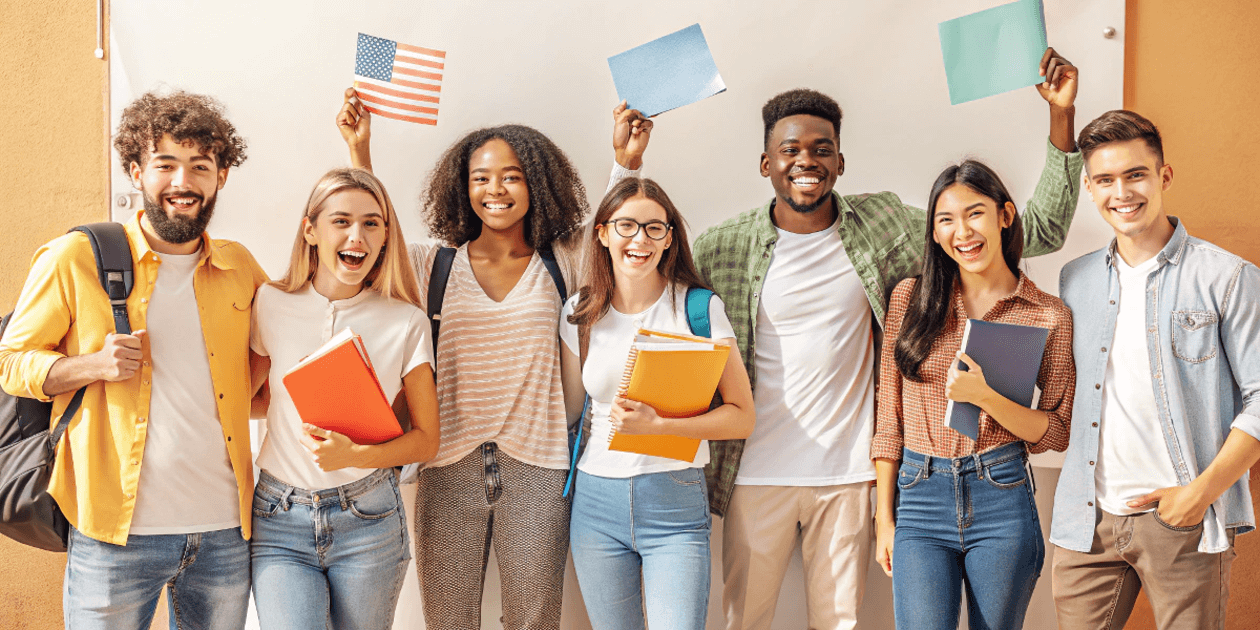
Learning German with AI: A new era of language learning
In today's fast-paced world, learning a new language like German is not just a passion for many people – it is a professional necessity, a cultural bridge, and a mental advantage. In the past, learning German meant endless grammar exercises, thick textbooks, and countless hours in the classroom. But with the rise of Artificial Intelligence (AI), we are witnessing a revolutionary change. AI-powered learning tools are redefining language acquisition – faster, more personalized, and surprisingly entertaining.
Why German? Why Now?
German is the most widely spoken native language in Europe. It is the key to a rich literary world, groundbreaking science, and one of the strongest economies in the world.
Whether you work in an international company, study at a prestigious German university, or want to read Goethe and Kafka in the original – German opens many doors.
However, German is also known to be challenging: complex grammar, compound words, and numerous dialects. This is where AI comes into play – not merely as a support, but as a true game changer.
How Artificial Intelligence is Changing German Learning
Personalized Learning Paths
One of the greatest advantages of AI is personalization. Traditional classes often follow a "one-size-fits-all" approach. In contrast, AI dynamically adapts to the learner’s pace as well as their strengths and weaknesses. For example, if you struggle with the four cases (nominative, accusative, dative, genitive), an AI-powered app will detect this and focus on that area. Trouble with pronunciation? Speech recognition technology provides immediate feedback and suggests improvements.
Natural Language Processing (NLP) for Real Interactions
Thanks to NLP, AI can enable meaningful dialogues – just like in real life. Instead of memorizing vocabulary, learners practice in context: asking for directions, ordering food, describing hobbies – as it happens in Germany or Austria. Modern chatbots act as patient conversation partners: they understand colloquial expressions, adjust to your language level, and gently correct errors.
Instant Feedback and Intelligent Corrections
Quick feedback is essential in language learning. AI eliminates the long wait for a teacher’s response: grammar mistakes, spelling, sentence structure – everything is identified and explained immediately. For instance, if you write "Ich liebe spielen Fußball", the AI will indicate that the correct form is "Ich liebe es, Fußball zu spielen" – including brief explanations.
Gamification: Making Learning Playful
Many AI-powered platforms utilize gamification: points, badges, leaderboards, and virtual missions motivate users. For example, in one "mission" you might need to purchase a train ticket in Berlin – all while practicing real-life language situations. Gamification taps into human psychology: we love challenges, rewards, and visible progress. This enhances both motivation and the joy of learning.

Popular AI Tools for Learning German
Some of the most well-known platforms:
Duolingo
Leverage AI to tailor exercises to your personal progress.
01Babbel
Focuses on conversational skills with speech recognition.
02LingQ
Offers original German texts and audio content tailored to your interests.
03Busuu
Combines AI feedback with corrections from native speakers.
04Rosetta Stone
Utilizes TruAccent technology to enhance pronunciation.
05Memrise
Combines AI with spaced repetition and videos from native speakers.
06Mondly
Enables real-life dialogue practice with virtual chatbots.
07ChatGPT
Used for both written and oral practice of German conversations.
08Anki with AI Plugins
Automatically optimizes repetition intervals for new vocabulary using AI plugins.
09Speakly
Focuses on frequently used German expressions for rapid practice.
10Elsa Speak (German Version)
Analyzes and specifically improves your German pronunciation.
11SuperMemo
Offers personalized study plans based on AI analysis.
12Real Success Stories: AI in Action
Personalized Study Plans
Anna from Brazil learned with Busuu. The AI focused on topics such as cooking and travel. In just three months, she was confidently ordering in Berlin cafés.
Virtual Language Exchange
Miguel from Spain uses Tandem to interact with native German speakers. AI-powered corrections help him to use more natural expressions.
Virtual Reality
Stephanie from Canada uses Mondly VR: she navigates through virtual train stations and cafés, practicing real-life conversational scenarios.
Accent Improvement
Peter from Australia improved his pronunciation with Elsa Speak, especially with challenging sounds like "ü" and "u".
Interest-Based Learning
Sofia from Italy loves fashion and art. With LingQ, she received specialized German articles and podcasts in these areas, intensifying her learning.
Advantages over Traditional Methods
- Flexibility: Learn anytime and anywhere.
- Cost-effectiveness: Many AI tools are cheaper than traditional language courses.
- Consistency: Daily reminders and personalized study plans promote regular practice.
- Practicality: Current language usage, dialects, and cultural nuances are taken into account.
The New Role of Teachers
Teachers remain indispensable – increasingly, they act as mentors and cultural mediators. While AI handles routine tasks, educators focus on more complex topics, intercultural skills, and motivation.
Future Outlook: AI and Learning German
Virtual reality experiences could soon become commonplace: attending Oktoberfest, riding the Berlin U-Bahn, or participating in university lectures – all virtually with AI guidance.
Emotional AI is also expected to recognize frustration or boredom and respond individually.
Learning German will become even more personalized, immersive, and emotional.
Take Advantage of AI
Learning German still requires discipline, curiosity, and perseverance. But thanks to AI, the journey becomes significantly more exciting and effective.
Personalized guidance, instant feedback, gamified progress, and authentic practice – all at your fingertips. Despite all the technology, the core of language learning remains unchanged: connection.
German is not just about grammar – it is culture, history, and humanity. With AI by your side, you are better prepared than ever before. Whether you read Nietzsche in the original, order a pretzel at Munich's Viktualienmarkt, or build your career at Siemens – the future is yours. Or, as the Germans say: “Übung macht den Meister.”
And with AI, that practice becomes much smarter.
.
FREE GERMAN COURSES
Discover effective learning without extra costs and take your first step toward fluent German!


Share


Language school Vienna | Learning German A1, A2, B1, B2, C1, C2 | German for beginners | Online German materials | German tests
© IFU Sprachschulung GmbH (IFU), 2026
Icons by